

Skip to content

INDUSTRIES

Technology adapted to how each industry operates

Processes, people, information, and priorities change from one industry to another. That is why the same tool can work well in one operation and get in the way in another. Start with the context that most resembles yours and let's discuss a possible route.

Where to start

Which one looks most like your operation?

Pick a context to see what usually creates friction, what we would review first, and which modernization route may make sense.

None of them claims prior experience in the sector.

Food and distribution

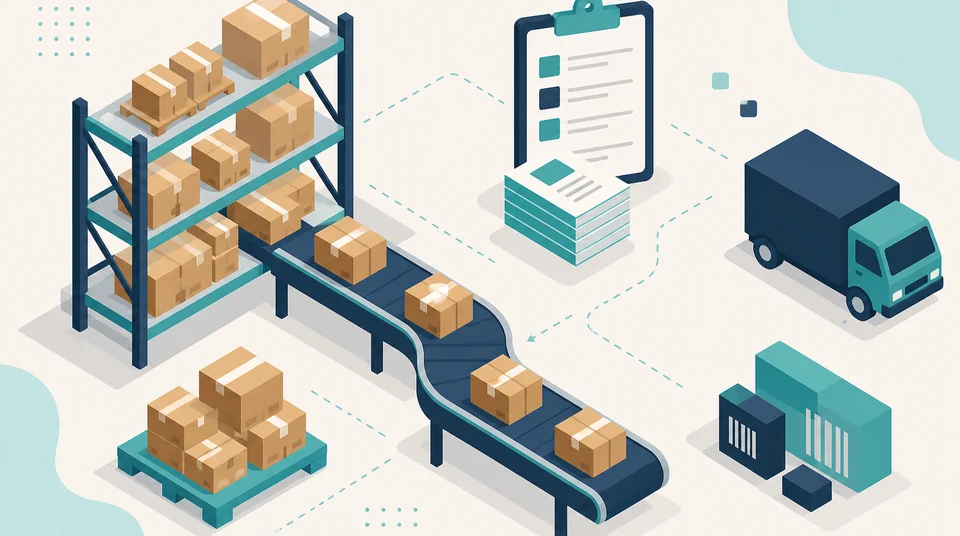
Orders, inventory, picking, dispatch, and delivery.

Product has an expiry date and delivery has a time slot. When orders, inventory, and dispatch live in separate tools, margin gets spent on corrections.

Typical priorities

  • Orders without repeated data entry
  • Reliable inventory when committing a sale
  • Visibility across dispatch and delivery
  • Turnover and fulfillment indicators
Explore this industry

Beauty and wellness

Scheduling, team, client experience, and follow-up.

The calendar is the heart of the business. When bookings, staff, inventory, and follow-up live in separate places, service hours and repeat visits slip away.

Typical priorities

  • Scheduling connected to staff and locations
  • Fewer no-shows and manual confirmations
  • Client history in a single place
  • Personal data with orderly access control
Explore this industry

Professional services

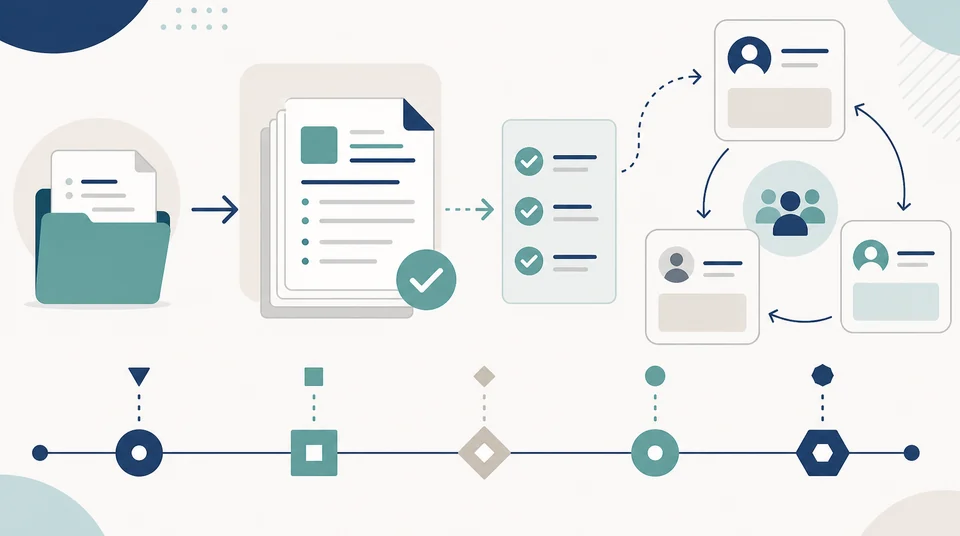
Client intake, documents, delivery, and approvals.

Work arrives through many doors and moves forward over email. Without a clear flow, follow-up turns manual and nobody knows exactly where each deliverable stands.

Typical priorities

  • Orderly client intake
  • Documents and approvals with traceability
  • Less manual chasing
  • Visibility into the status of each engagement
Explore this industry

Retail and commerce

Product, inventory, sales, and fulfillment across channels.

Selling across several channels is easy to announce and hard to sustain. When product and inventory are not connected, each channel produces its own version of the truth.

Typical priorities

  • Consistent product information
  • A single inventory across channels
  • Orderly order fulfillment
  • Reliable sales indicators
Explore this industry

Property and building operations

Maintenance, vendors, requests, and documentation.

Maintenance, vendors, resident or occupant requests, and documentation live across email, chat, and shared folders. Operations run, but leave little evidence of what was done.

Typical priorities

  • Requests through a clear, traceable channel
  • Scheduled and recorded maintenance
  • Contracts and documentation in one place
  • Management reporting without manual work
View related services

BUSINESS PROFILE

Small and growing businesses

Business profile: operations grew faster than the tools behind them.

Operations grew faster than the tools behind them. What worked with five people starts to break with twenty, and nobody has time to stop and redesign it.

Typical priorities

  • Knowing what to fix first
  • Moving forward without stalling operations
  • Getting value from what is already paid for
  • Technology decisions made with judgment
See how to prioritize modernization

Common themes

What repeats across very different industries

Even though every operation is different, certain themes tend to be relevant in almost any context. They are a good starting point when it is not yet clear where to begin.

Scattered information

Important data lives in spreadsheets, email, and chat. Nobody argues about the numbers, yet each area has its own version. We can help consolidate a reliable source without forcing a change to everything at once.

Repetitive manual work

Copying, pasting, forwarding, and consolidating consume hours of the team's time. We would review which tasks repeat under clear rules and which ones are worth automating first, starting with the lowest-risk ones.

Processes that depend on key people

When a process only works if one particular person is available, the operation becomes fragile. A documented flow supported by a system reduces that dependency.

Late visibility

Problems surface after they have already cost money. With indicators connected to daily operations, the conversation happens earlier and decisions stop relying on intuition alone.

Systems that do not talk to each other

Tools that are useful on their own but force people to retype the same data several times. In many cases what already exists can be integrated before considering a full replacement.

Next steps

Services

From context to the right service

Each context connects to services where you can review scope, deliverables, and FAQs: assessment, systems, automation, data, web, infrastructure, cybersecurity, and support.

Explore services

Types of work

What this looks like in practice

Work lanes show what we would examine and what we can build for each problem type, with illustrative examples across systems, automation, web, infrastructure, and data.

See types of work

FAQ

Frequently asked questions

Why does technology strategy change by industry?

Because processes, timing, and what counts as a costly mistake all change. In a distribution operation, an hour of delay in dispatch has a different effect than a delay in a professional report. Technology should follow that logic, not the other way around.

Do you need special tools for each industry?

Not always. In many cases general-purpose platforms cover operations well when they are configured around the real process. We would only recommend something specialized when the process genuinely requires it and the cost is justified.

We already have systems running. Do they need to be replaced?

Usually not. We would first review what your current tools already handle well and where friction appears. It is often better to integrate, tidy up, or complete what exists rather than replace it, which also preserves what the team already knows how to use.

What if our process does not look like the rest of our industry?

That is more common than it seems, and it is not a problem. The starting point is not the industry label but the real process: how work comes in, who decides, where time is lost, and what information is missing when a fast answer is needed.

Might we need several services at once?

Yes, and that is common. A single objective can touch systems, automation, and data at the same time. What matters is sequencing the steps so each one leaves something usable, instead of opening several fronts in parallel.

Can we modernize only part of the operation?

Yes. A well-chosen partial modernization is usually the most sensible route: take the process that hurts most, stabilize it, and measure the effect before continuing. That way the team absorbs change without stalling operations.

How do we prioritize when everything feels urgent?

We would look at three things: what fails most often, what costs the most when it fails, and how hard it would be to fix. Whatever combines high impact with low complexity is almost always the best first step.

Does this apply to small and mid-sized businesses?

Yes. In fact, that is where operational order tends to show results fastest. Scope adjusts to size: fewer moving parts, simpler decisions, and staged progress that does not strain cash flow.

View more questions
Which industries can benefit from automation, data, and business systems?

Opportunities exist across many industries when there are repetitive processes, fragmented information, coordination challenges, or decisions that depend on data. The published industry pages illustrate several specific contexts, but an assessment should start with how each company actually operates rather than assuming every organization in an industry is the same.

Does Orquitech only work with large companies?

No. Many modernization problems also appear in small and growing businesses, especially when operations outgrow the tools and processes they started with. Company size alone does not determine the project; the need, complexity, impact, and ability to execute change are more important.

How do we know whether a problem comes from our industry or our internal process?

The actual workflow, exceptions, data, and dependencies should be examined before looking for an "industry solution." Some constraints are inherent to the business, while others are internal design, integration, or control problems. Separating them helps avoid buying technology for a problem that requires a different type of change.

Can a CRM, ERP, or automation solution be adapted to our specific business rules?

Yes, when the rules are sufficiently defined and the platform can support them in a maintainable way. It is useful to distinguish genuinely differentiating processes from those that can be standardized so an enterprise solution does not become an unnecessary accumulation of customizations.

What if we have multiple offices, stores, warehouses, or distributed teams?

Modernization should consider which information must be shared, which decisions remain local, how access is managed, and how operations continue when one location loses connectivity or has an exception. Centralization does not mean eliminating all local autonomy; it means defining what needs to be shared and controlled.

Do cybersecurity and business continuity requirements change by type of business?

Yes. Risk depends on information sensitivity, required availability, access methods, third parties, critical systems, and the consequences of disruption. Controls should be prioritized according to that context rather than applied as an identical checklist to every organization.

Does your operation look like one of these contexts?

Tell us how your process works today and let's discuss a realistic route, with a concrete first step and no inflated promises.

Talk on WhatsApp

Contact

Contact us

Reach our team on the channel you prefer. Tell us what you want to improve and we will guide the next step.

WhatsApp

Message us directly to discuss your requirement or project.

Open WhatsApp

Phone

Call our team during regular business hours.

+57 322 810 0001

Call now

Email

Send us the details of your question or project.

info@orqui.tech

Send email

Bogotá office

Carrera 62 #98B-22, Office 302A, Bogotá, Colombia

Get directions
· FREE ISO 27001 REVIEW ·