Skip to content

Support and delivery

IT support and technology project delivery

Support keeps daily technology running with clearer priorities and ownership. Project delivery organizes changes, migrations, and implementations until there is an operable result. Both connect without blending into an undefined scope.

Day-to-day IT or technology projects lack clear continuity and ownership.
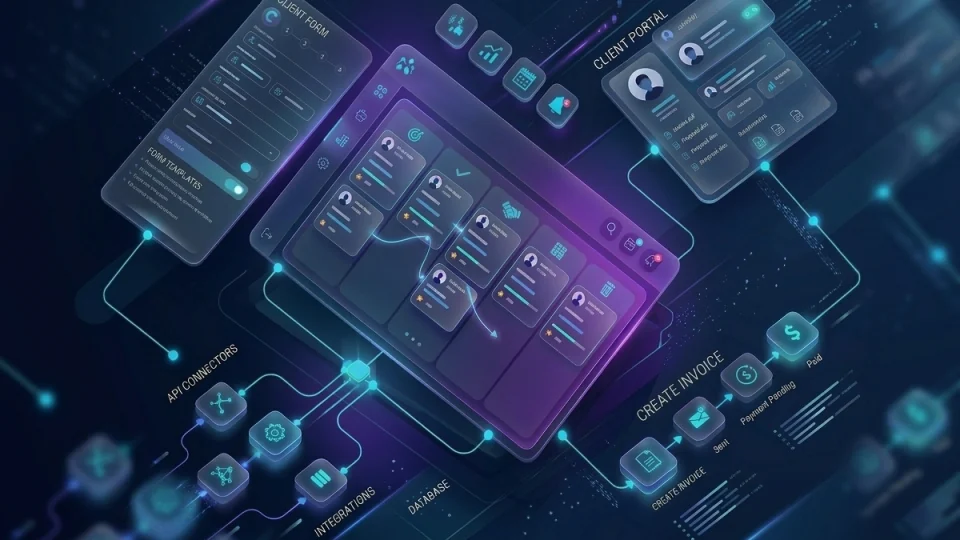
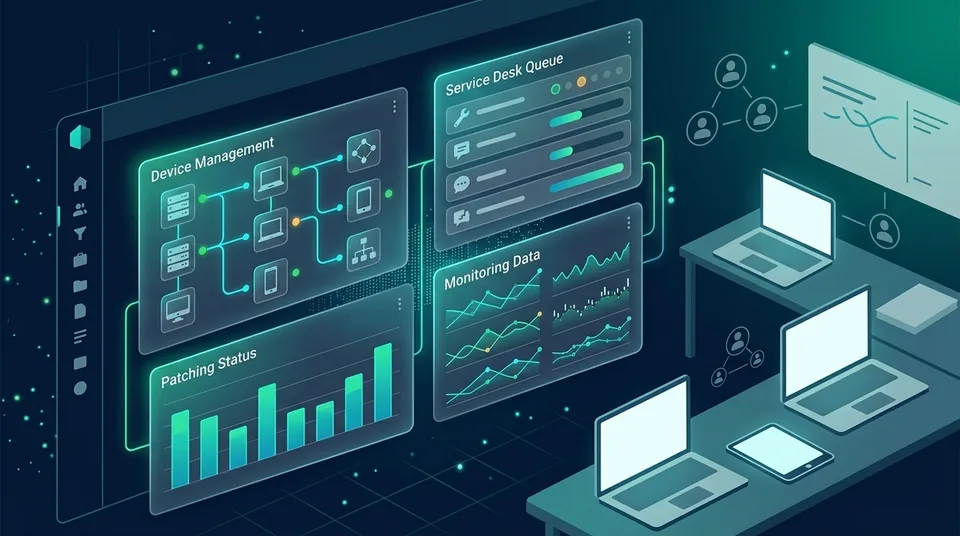
Illustration of operational support and coordinated technology project delivery

Capability illustration

Scenarios

Common situations

Signals that this service may be the right starting point.

Requests without an owner

What usually happens
Requests arrive through informal chats, priorities are unclear, and the same incidents repeat.
What we would examine
Request channels, categories, priority rules, suppliers, and operational documentation.

Suppliers passing responsibility

What usually happens
Each supplier claims the problem belongs to someone else and operations is left without a useful answer.
What we would examine
Service boundaries, escalation, responsibility matrix, and visibility of recurring problems.

Projects without controlled scope

What usually happens
Requirements change without a record, acceptance criteria are missing, and go-live arrives without handover.
What we would examine
Objectives, scope, work plan, risks, testing, and transition plan to operations.

Implementations that are not operable

What usually happens
The project is declared finished, but nobody knows how to operate, document, or stabilize the result.
What we would examine
Acceptance criteria, deployment, operational handover, stabilization, and status reporting.

Assessment

What we review during discovery

Items that typically enter initial assessment scope.

  • Request and incident channels
  • Categories, priorities, and escalation
  • Suppliers, assets, and documentation
  • Repeated problems and user communication
  • Service-management (ITSM) practices
  • Project objectives, scope, and requirements
  • Work plan, risks, and dependencies
  • Testing, acceptance, deployment, and operational handover

Operational support

Support with priorities, ownership, and traceability

We organize the request channel, priority criteria, and follow-up so operations knows what is being handled and why.

  • Clear channel for requests and incidents
  • Agreed priority criteria
  • Owners and escalation paths
  • User communication on status
  • Usable operational documentation
  • Analysis of repeated problems

Project delivery

Technology projects with scope and control

We structure objectives, scope, decisions, and transition to operations so the project leaves a usable result.

  • Controlled objectives and scope
  • Work plan and decision log
  • Visible risks and dependencies
  • Testing and acceptance criteria
  • Deployment coordination
  • Operational handover and stabilization

Before and after

What changes with discipline

Before

  • Requests through informal channels without priority
  • Repeated incidents without analysis
  • Projects with fuzzy scope and no acceptance
  • Go-live without documented handover

After

  • Request, priority, and escalation model
  • Responsibility matrix and follow-up
  • Project plan with logged risks and decisions
  • Operational handover package and stabilization

Scope, coverage, hours, priorities, and response expectations are defined per agreement. We do not promise 24/7 support or fixed project dates without an agreed plan.

Fit

Who it is for — and who it is not

Good fit

  • You need to organize daily support with clear priorities
  • You need to coordinate existing technology suppliers
  • You have an implementation or migration project that needs control
  • You want a clear handover from project to operations

Clear boundaries

  • We do not promise 24/7 support
  • We do not promise fixed response times unless agreed
  • We do not offer unlimited support
  • We do not promise project dates or budgets
  • We do not promise resolution of every incident
  • We do not assume responsibility for systems outside agreed scope
  • Not every engagement includes both support and project delivery

Scope

What a typical project includes

  1. 01Current-state assessment of support or project
  2. 02Service boundaries and priority model
  3. 03Responsibility matrix and escalation
  4. 04Operational documentation
  5. 05Project initiation: objectives, scope, and plan
  6. 06Risk management, testing, and acceptance
  7. 07Deployment, operational handover, and stabilization

Capabilities

Related capabilities

  • IT Support
  • IT Management / ITSM
  • IT Projects
  • IT Services
  • IT education and training
  • Remote work and remote solutions
  • Governance and compliance

Deliverables

What you can expect to receive

  • Support or project current-state assessment
  • Service boundaries
  • Request and priority model
  • Responsibility matrix
  • Escalation model
  • Operational documentation
  • Project charter or initiation summary
  • Scope and work plan
  • Risk and dependency register
  • Decision log
  • Testing and acceptance approach
  • Deployment and transition plan
  • Operational handover package
  • Status reporting and improvement backlog

Methodology

How we deliver this service

  1. 01

    Diagnose the needed path

    We clarify whether the problem is daily support, project delivery, or both with distinct boundaries.

  2. 02

    Define the operating or project model

    We agree channels, priorities, scope, owners, and success criteria.

  3. 03

    Execute with follow-up

    We handle requests or advance the plan with visibility of risks and decisions.

  4. 04

    Validate and transfer

    We test, accept, and leave documentary handover to operations.

  5. 05

    Stabilize and improve

    We close stabilization incidents and leave a prioritized improvement backlog.

FAQ

Questions about this service

What is the difference between operational support and project delivery?

Operational support handles day-to-day requests and incidents with priorities and owners. Project delivery organizes a change with scope, plan, testing, and handover until there is an operable result. They can coexist, but are contracted with distinct boundaries so daily urgencies do not dilute project control. In the initial meeting we clarify which path applies or how to combine them.

Which channels can be used to request support?

Together we define a primary channel—dedicated email, internal form, or support desk—and rules for urgencies. We avoid relying only on informal chats where requests get lost. The agreed channel is documented for users and suppliers. WhatsApp may be used for point coordination, but it does not replace a record when traceability is needed.

How are priorities and response expectations defined?

We agree criteria based on business impact: full outage, degradation, planned request, and so on. Target times, if any, are part of the engagement's service agreement—not a generic website promise. We document what is urgent and who escalates. That way the internal team and suppliers share the same rules.

Can you coordinate existing technology suppliers?

Yes, when scope includes it. We clarify responsibilities, contacts, and escalation between suppliers and the internal team. The goal is to reduce blame ping-pong and leave evidence of agreements. We do not automatically replace a supplier; we coordinate or intervene as contracted.

Can you take over a project that is already underway?

Yes—we start with a current-state diagnosis: remaining scope, risks, pending decisions, and documentation quality. From that we propose a recovery or orderly closure plan. Sometimes stabilization is wiser before more building. We do not inherit prior dates as our commitment without replanning.

How do you prepare handover from a project to operations?

We define acceptance criteria, operational documentation, access, escalation contacts, and a short stabilization period. We train the people who will operate the result. Handover is not a closing email—it is a usable package. If pieces are missing, we leave them in an explicit backlog instead of pretending everything is finished.

Can the service be contracted in stages or for a specific scope?

Yes. It can be support only, a single project, a diagnosis phase, or a staged sequence. Each scope has written deliverables and boundaries. That avoids mixing daily urgencies with control of a large project. The proposal states clearly what is in and what is out.

How much does business IT support cost?

Cost depends on users, locations, systems, coverage hours, environment complexity, and the amount of onsite work required. A service that complements an internal team is different from a broader recurring support scope. Responsibilities, priorities, channels, and exclusions should be defined before pricing the service.

View more questions
Do you offer monthly IT support or outsourced IT for small businesses?

Recurring support can be structured when the need and scope justify it. The service can combine remote work, coordination, and scheduled onsite activities, but it should specify what is included, how requests are received, which responsibilities remain internal, and which activities are handled as separate projects.

Can you complement our internal IT team instead of replacing it?

Yes. A complementary model can provide additional capacity, specialized knowledge, or coordination for specific projects while the internal team retains its appropriate knowledge and responsibilities. Boundaries between both teams should be defined from the beginning to avoid duplication or work without clear ownership.

What does a help desk or ticket-management process include?

Depending on scope, it can organize requests and incidents through categories, priorities, owners, history, and follow-up. The value is not simply recording tickets, but understanding what repeats, what requires escalation, and what should become a separate improvement initiative or project.

Can Microsoft 365, devices, access, networks, and technology vendors be managed within IT support?

Some of those activities can be included in a recurring service depending on the environment and agreement. Authorized access, responsibilities, tools, permitted changes, and relationships with third parties should be defined so support remains controlled and auditable instead of depending on informal permissions.

What is the difference between recurring IT support and incident-based support?

Incident-based support addresses a specific need when it occurs. A recurring service can include ongoing knowledge of the environment, procedures, follow-up, maintenance, and predefined responsibilities. The appropriate model depends on how much the company needs prevention, continuity, and accumulated knowledge of its systems.

What should happen when changing IT support providers?

The transition should include inventory, access, documentation, vendor contacts, critical services, backups, open issues, and responsibilities. Administrative credentials should also be changed or validated where appropriate. An orderly transition reduces the risk of discovering dependencies only when an incident occurs.

Should IT support document changes and configurations?

Yes. Documentation supports continuity, troubleshooting, auditing, and knowledge transfer. Not every change requires an extensive document, but critical configurations, access, dependencies, and important decisions should not exist only in one person's memory.

Which IT problems can be solved remotely and which require an onsite visit?

Configuration, administration, diagnostics, users, and many software incidents can be handled remotely when appropriate access exists. Physical failures, cabling, certain network issues, equipment installation, or infrastructure assessments may require onsite work. The delivery method should be determined by the problem rather than a fixed rule.

Technologies

Frequent platforms and tools

  • Microsoft 365
  • Microsoft Teams
  • SharePoint
  • Microsoft Azure
  • GitHub
  • GitLab
  • Cloudflare
  • Proxmox
  • Windows Server
  • Linux

Do you need to organize support or move a project forward?

Tell us the operational need and we will define together whether support, project delivery, or both with clear boundaries applies.

Talk about an operational need

Contact

Contact us

Reach our team on the channel you prefer. Tell us what you want to improve and we will guide the next step.

WhatsApp

Message us directly to discuss your requirement or project.

Open WhatsApp

Phone

Call our team during regular business hours.

+57 322 810 0001

Call now

Email

Send us the details of your question or project.

info@orqui.tech

Send email

Bogotá office

Carrera 62 #98B-22, Office 302A, Bogotá, Colombia

Get directions
· FREE ISO 27001 REVIEW ·